The Springboks levelled Rugby's Greatest Rivalry at 1-1 with a 33-26 victory over the All Blacks in Cape Town, producing the statement response required after their disappointing first Test defeat.
Rassie Erasmus' side were far more clinical with their opportunities, built a 24-14 half-time lead and then withstood another ferocious New Zealand comeback to secure the win.
Yet the numbers tell an interesting story: the Springboks were not necessarily better across the board than they had been in Johannesburg, but their execution, tactical discipline and ability to win decisive moments ultimately separated the sides.
A ferocious Springboks start
The difference was immediately apparent.
Jesse Kriel scored after just two minutes, finishing a powerful opening sequence in which the Springboks established go-forward ball through the middle before Cobus Reinach released the centre into the gap.
Cheslin Kolbe converted, giving South Africa precisely the start they needed.
New Zealand responded in typically ruthless fashion.
A destructive response
A lineout on halfway created the platform, Will Jordan beat two defenders before finding Cam Roigard on his shoulder, and the scrum-half finished the move to level the contest at 7-7 after 16 minutes.
It was another reminder of the All Blacks' ability to turn even relatively innocuous possession into points.
But the Springboks did not allow the try to change the momentum.
Kolbe added a penalty in the 19th minute before Damian de Allende crossed four minutes later.
The inside centre was far more influential than he had been in Johannesburg, while his combination with Kriel looked considerably more natural with neither player required to move out of position.
Influential captain
The All Blacks again found a response through Damian McKenzie, who scored in the 30th minute, but Siya Kolisi provided the perfect answer before half-time.
The returning captain finished a direct attack after Reinach found Pieter-Steph du Toit close to the line, before Kolisi gathered a slightly awkward pass and powered through to score after running a great line.
Kolbe again converted to send the Boks into the interval 24-14 ahead.
That was the Springboks' first-half statement: attack the gainline, win the collisions, take the points and make New Zealand chase.

Kolbe, Kolisi and the big players step up
Cheslin Kolbe was outstanding.
The Player of the Match finished with 18 points, kicking four penalties and three conversions from seven attempts.
That 7/7 record was not merely aesthetically pleasing; it was the difference between a seven-point victory and a potentially very different ending.
Kolbe's value went beyond the tee, too.
He won important aerial contests, remained a threat in broken play and even produced an intercept in the second half before being unable to complete the counter-attack.
His performance embodied the accuracy South Africa had lacked in Johannesburg.
Kolisi's return was similarly important.
The captain brought the intensity expected of him, scored a try and delivered the leadership required to prevent the All Blacks from taking control when momentum began to swing.
His post-match comments were telling: South Africa knew they had failed to take their opportunities in the first Test and deliberately focused on correcting that.
Jasper Wiese again supplied enormous physicality, although New Zealand clearly adjusted to his first-Test performance by attempting to double up on him.
He finished with 11 carries and remained an important source of go-forward ball.
Second row veteran steps up to the plate
Eben Etzebeth deserves particular credit.
His influence was less obvious through carrying statistics but enormous at lineout time.
He repeatedly disrupted New Zealand's set-piece possession, including a crucial steal inside the Springboks' own 22 in the second half when the All Blacks were building pressure.
And then there was Malcolm Marx and Ox Nche.
The decision to hold the heavyweight front row of Marx, Nche and Wilco Louw back until later in the game looked increasingly clever as the contest progressed.
Marx arrived around the 36-minute mark and immediately influenced the breakdown, while Nche brought his trademark physicality and Thomas du Toit was outstanding throughout the match.
Breakdown specialist
Marx's breakdown work was particularly decisive.
He won a steal shortly after half-time to halt a promising New Zealand attack, then produced another turnover in the 71st minute, ripping the ball away from McKenzie just as the All Blacks were beginning to threaten.
Kolbe converted the resulting penalty to stretch the lead to 14 points.
Those are the moments that win Test matches.
The Boks were more clinical, not statistically superior
This is where the second Test becomes particularly interesting.
The Springboks won 33-26 despite New Zealand actually scoring four tries to three.
The All Blacks had more possession, more territory, more carries, more metres and more clean breaks, according to the available match statistics.
South Africa, however, dominated the areas that mattered most to their game: they won six turnovers to New Zealand's two, completed 100 per cent of their lineouts compared to 83 per cent for the All Blacks, and conceded fewer penalties.
That is why I don't think the Springboks necessarily produced a categorically better overall performance than they did in Johannesburg.
They were simply better at playing the game they needed to play.
The first Test was the opposite.
South Africa dominated territory and the contact battle but repeatedly failed to convert pressure into points.
New Zealand were clinical whenever they reached the Springboks' 22 and ultimately scored five tries from nine visits.
YOU MAY ALSO LIKE: Springboks vs All Blacks: How New Zealand turned the tables on the Boks in RGR opener

How the Springboks took control
In Cape Town, South Africa flipped that equation.
They led from the second minute and never surrendered the advantage. Kolbe took every available goal.
The Boks' lineout functioned. Their breakdown work improved. Their defensive line became increasingly difficult for New Zealand to penetrate.
And the contestable kicking game was far more effective.
Reinach repeatedly put the All Blacks under aerial pressure, while Ethan Hooker was excellent in the air.
The Springboks' ability to recover their own kicks prevented New Zealand from turning every kick into a counter-attacking opportunity.
It was not domination.
It was control of the important moments.
ALSO CHECK OUT: Springboks vs All Blacks betting tips and predictions: Back South Africa to dominate at Ellis Park
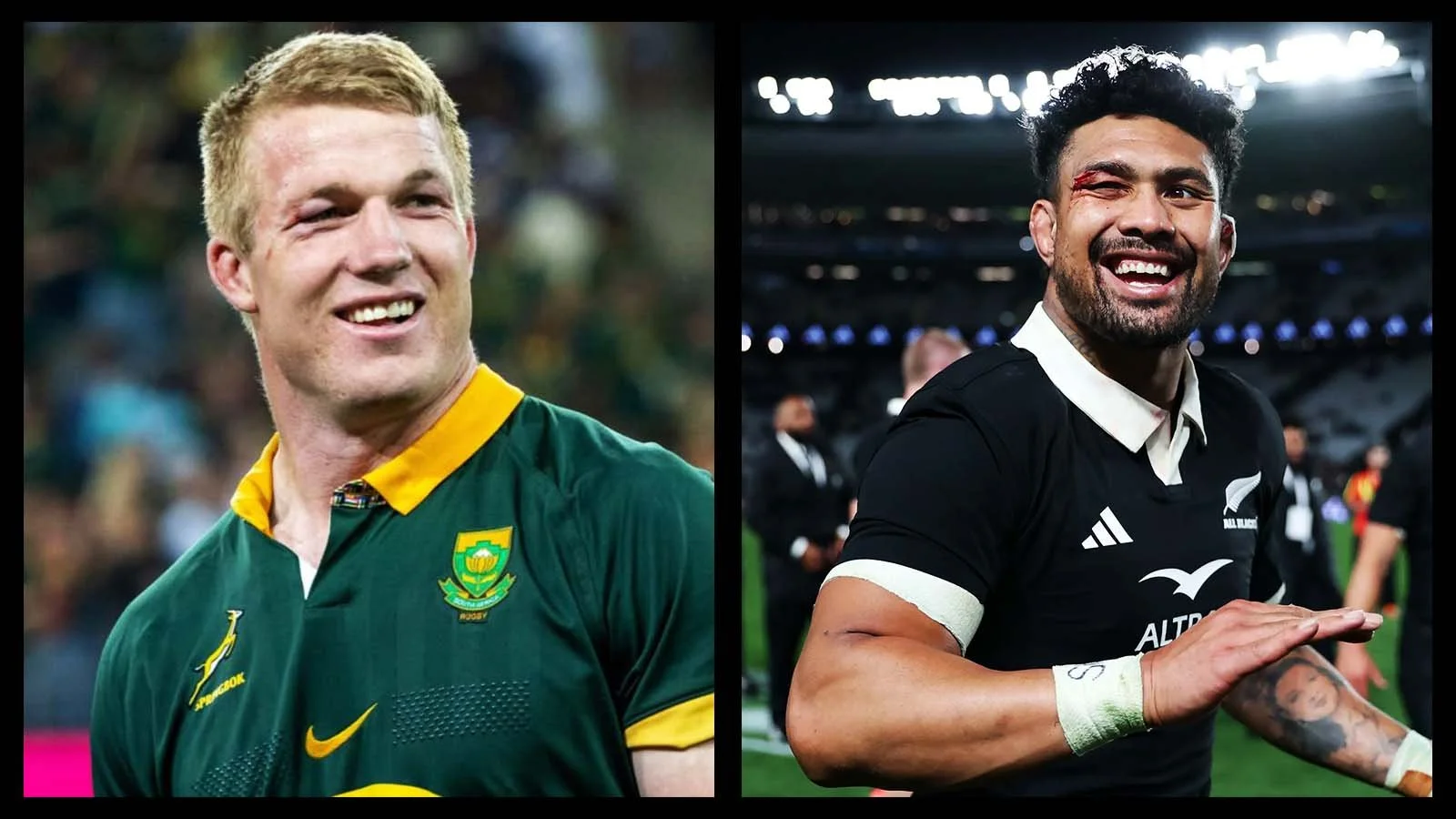
You can never write off the All Blacks
This is probably the biggest takeaway from the second Test.
New Zealand were never out of it.
Roigard scored their first try. McKenzie finished another excellent attacking move.
Leroy Carter then exploded down the left wing in the 66th minute after New Zealand transitioned from a Van den Berg kick, reducing the deficit to 30-21.
Then came the inevitable.
Ardie Savea scored in the 77th minute, crashing through Marx after New Zealand had attacked from a scrum and shifted the ball towards the right.
Ruben Love converted, making it 33-26 with enough time remaining for the All Blacks to genuinely threaten the result.
That sequence perfectly encapsulates this New Zealand team.
They don't need much.
Give Roigard, Jordie Barrett, McKenzie or Will Jordan an opening and suddenly the entire game changes.
The All Blacks' backs remain their biggest weapon, and their four tries from relatively limited opportunities again demonstrated their attacking efficiency.
Jordan finished with 117 metres carried, while the All Blacks made eight clean breaks to South Africa's five.
ABs forwards need to take the pressure off
But their forwards still have work to do.
The scrum has undoubtedly improved throughout the tour and held up considerably better than it did in Johannesburg.
However, South Africa had the edge at lineout time, while the All Blacks' inability to consistently win the gainline battle meant their backs were often receiving possession without the same level of front-foot momentum.
That's the next evolution required from Dave Rennie's side.
The final moments tell the story
South Africa's defensive resolve ultimately won the game.
With New Zealand seven points behind, Lood de Jager was yellow-carded in the 80th minute for a high tackle on Ruben Love, leaving the Springboks to defend the final moments with 14 men.
It looked like precisely the sort of opening New Zealand could exploit.
Instead, Cameron Hanekom produced the final intervention.
As the All Blacks moved beyond halfway, Jordan made ground before Hanekom made the tackle and then won the turnover.
That was effectively the final act of the match and perfectly represented the Springboks' improved defensive resolve.
Controversial tactical switch up
There was also the tactical curiosity before kick-off.
Erasmus swapped his entire front row roughly an hour before the match, moving Gerhard Steenekamp, Deon Fourie and Thomas du Toit into the starting XV while Marx, Nche and Louw moved to the bench.
Erasmus later explained that the decision was influenced by the forecast changing from wet to dry, allowing the lighter starting combination to be used before unleashing the heavyweight trio later.
Whatever one thinks of the gamesmanship, it was permitted and, tactically, it worked.
The Boks had enough in the tank to finish strongly through their replacements, while Thomas du Toit produced an excellent all-round performance and the introduction of Marx and Nche altered the breakdown and collision picture.
Back to JHB
The series now moves back to Johannesburg with everything to play for.
And perhaps that is the most fascinating part of these first two Tests: neither result has necessarily told us which team is better.
The first Test demonstrated New Zealand's clinical brilliance when South Africa failed to convert dominance.
The second showed South Africa's ability to absorb the All Blacks' attacking statistics, punish their mistakes and take almost every point available.
The Springboks have leveled the series, but the All Blacks remain very much alive.
And with two more Tests still to come, this rivalry tour’s final picture is yet to be painted.
READ NEXT: Premier League Gameweek 2 predictions: Best bets for Palace vs Man City, Chelsea vs Brighton & more